Minggu, 16 Maret 2014

Intel Core i7 4770k Haswell Series

Sumber : Jagatreview

Salah satu prosesor yang paling ditunggu kehadirannya di tahun 2013 ini, Core i7-4770K, akhirnya muncul! Prosesor yang menggunakan arsitektur baru dari Intel, Haswell, ini mengusung sejumlah perbaikan yang membuatnya memiliki keunggulan dibandingkan pendahulunya yang sama-sama menjadi prosesor flagship dari keluarga Core i Series, Core i7-3770K dengan arsitektur Ivy Bridge. Keunggulan seperti apa yang dimiliki oleh prosesor baru ini? Kami cukup beruntung bisa mendapatkan prosesor Core i7-4770K dan dengan demikian, kami bisa mengulas kemampuan dari prosesor tersebut untuk Anda, pembaca setia JagatReview!
intel-core-i-gen-4-haswell-logos-500x333
Prosesor Core i7-4770K dengan arsitektur Haswell ini menggunakan soket baru yang tentunya berbeda dengan soket-soket yang digunakan prosesor dari generasi sebelumnya. Prosesor ini, dan juga prosesor-prosesor lain yang menggunakan arsitektur Haswell menggunakan LGA1150. Hal itu tentu saja menandakan bahwa prosesor Haswell akan membutuhkan motherboard baru untuk mengakomodasi penggunaan soket baru tersebut. Motherboard untuk Haswell akan menggunakan chipset baru dari Intel, 8 Series, yang memang khusus disiapkan untuk menonjolkan berbagai kelebihan yang diusung oleh Haswell.
Bila Anda masih belum mendapatkan informasi terkait detail dari arsitektur Haswell dan platform yang menyertainya, kami menyarankan Anda untuk terlebih dahulu membaca artikel Teknologi Terbaru di Balik Intel Haswell.
Sebelum melanjutkan ke bagian pengujian, mari kita sedikit mengulas spesifikasi prosesor ini. Prosesor Core i7-4770K mengusung empat core dengan fitur Hyper Threading, yang membuatnya bisa menjalankan 8 thread. Keempat core tersebut berjalan pada kecepatan standar 3.5 GHz dan bisa meningkat hingga 3.9 GHz ketika Turbo Boost aktif. Akhiran “K” yang ada pada kode prosesor ini menandakan bahwa prosesor ini memiliki unlocked multiplier. Prosesor Core i7-4770K ini juga dilengkapi dengan pengolah grafis terintegrasi Intel HD Graphics 4600 dan memiliki TDP 84 Watt.
Berikut ini detail spesifikasi dari prosesor Core i7-4770K.

CPU-Z Screenshot

Intel Core i7-4770K “Haswell”

Haswell_Corei7_4770K_CPUZ_cpu-3900

Haswell_Corei7_4770K_CPUZ_graphics

Platform Pengujian

  • Prosesor: Intel Core i7-4770K, Core i7-3770K, Core i5-3570K, dan AMD FX-8350
  • Motherboard: Intel DZ87KLT75K, Intel DZ77BH, dan Asus Crosshair V Formula
  • Graphics card: NVIDIA GeForce GTX 680
  • Memory: 2 Keping KHX1600C9D3K4/16GX ( 8 GB)
  • Hard Drive: Kingston HyperX SSD 120 GB
  • Power Supply: Corsair Professional Series™ Gold AX850 — 80 PLUS® Gold Certified Fully-Modular Power Supply
  • Cooling: Stock Cooling
  • Monitor: Monitor Full HD
  • Input: Keyboard dan Mouse standar
  • OS: Windows 7

Hasil Pengujian

Blender 2.49b

Blender merupakan aplikasi “open source” untuk 3D-modelling. Kami menguji kinerja prosesor dalam merender objek 3D di aplikasi ini. Hasil pengujian disajikan dalam satuan waktu. Semakin sedikit waktu yang dibutuhkan, semakin baik.
Haswell_Corei7_4770K_Blender
Pada aplikasi ini terlihat peningkatan 10% antar generasi. Hampir sama dengan peningkatan yang dialami ketika terjadi pergantian arsitektur darin Ivy Bridge ke Sandy Bridge.

Cinebench R11.5

Cinebench merupakan aplikasi pengujian untuk mengukur kinerja hardware dalam merender sebuah scene 3D. Hasil pengujian disajikan dalam bentuk skor. Semakin tinggi skor yang dihasilkan, semakin baik.
Haswell_Corei7_4770K_Cinebench
Haswell_Corei7_4770K_Cinebench-SingleThread
Pengujian sintentik menggunakan aplikasi ini menunjukkan peningkatan kurang lebih 7% antara 3770K dengan 4770K. Sebuah peningkatan yang kurang berarti mengingat ini adalah pergantian generasi, bukan sekedar pergantian fabrikasi saja.

Excel 2010 – Montecarlo

Anda tentu tidak asing dengan aplikasi spreadsheet buatan Microsoft ini. Kami menguji kinerja prosesor dalam menjalankan “Monte Carlo Simulation Table” di aplikasi ini. Hasil pengujian disajikan dalam satuan waktu. Semakin sedikit waktu yang dibutuhkan, semakin baik.
Haswell_Corei7_4770K_Excel2010_Montecarlo
Perbedaan antara kedua prosesor beda generasi ini kurang lebih berkisar pada angka 7%.

MediaEspresso 6.5

MediaEspresso 6.0 merupakan versi terbaru dari aplikasi transcoding video. Aplikasi ini mampu mengubah sebuah format video ke format video lainnya, seperti video format Blackberry, Apple iPhone, dan lain-lain. Salah satu kelebihan aplikasi ini adalah dukungan terhadap feature AMD (ATI) Stream, NVIDIA CUDA, dan di versi terbaru aplikasi ini mendukung Intel Quick Sync. Hasil pengujian disajikan dalam satuan waktu. Semakin sedikit waktu yang dibutuhkan, semakin baik.
Haswell_Corei7_4770K_MSE_320x240_CPU
Haswell_Corei7_4770K_MSE_720x480_CPU

Photoshop CS 6

Photoshop CS6 merupakan aplikasi manipulasi gambar versi terbaru dari Adobe. Kami masih menguji menggunakan Action bernama Photoshop Speed Test yang telah sedikit kami modifikasi untuk lebih mencerminkan operasi-operasi yang biasa dilakukan apabila bekerja dengan Photoshop.
Haswell_Corei7_4770K_PhotoshopCS6_CPU

iTunes

Haswell_Corei7_4770K_Itunes

Handbrake

Haswell_Corei7_4770K_Handbrake

Konsumsi Daya

TDP yang diusung kedua prosesor Haswell adalah 84 Watt.
Haswell_Corei7_4770K_KonsumsiDaya
Dengan peningkatan rata-rata 6-10% disemua benchmark, peningkatan konsumsi daya pun pasti angka terjadi. Dengan perbedaan berkisar pada 14.4 Watt yang kurang lebih 10% diatas 3770K, membuat prosesor ini bisa dikatakan cukup hemat daya.

Kesimpulan

Mengusung arsitektur dan teknologi terbaru, Core i7 4770K tampil memuaskan pada pengujian kami kali ini. Bermodalkan arsitektur terbaru bernama Haswell dan proses fabrikasi 22 nm yang telah disempurnakan, Core i7 4770K mampu melahap semua pengujian kami dengan hasil memuaskan. Bahkan dengan performa seperti itu konsumsi daya Core i7 4770K tetap terjaga pada kisaran 120 Watt pada kondisi full-load meskipun pada sistem yang kami gunakan terdapat graphics card add-on.
Di sisi performa CPU, Core i7 4770K ternyata tidak menawarkan lompatan performa jauh dibandingkan Core i7 3770K. Pada pengujian kami terlihat peningkatan performa maksimal hanya berkisar pada angka 10% saja. Tentu saja hal ini menjadikan pemilik Core i7 3770K boleh berlega hati karena target upgrade mereka adalah prosesor dengan performa lebih tinggi dari Core i7 4770K. Terlebih mengingat untuk mencicipi Core i7 4770K, pengguna perlu membeli motherboard baru dimana hal ini meningkatkan biaya upgrade.
Core i7 4770K merupakan prosesor kelas mainstream terbaik dan terkencang dari Intel saat ini. Dengan kisaran harga jual $332, prosesor ini merupakan pilihan menarik jika Anda ingin mencicipi sebuah platform mainstream kelas atas dengan performa tinggi tanpa mengeluarkan banyak biaya.

Manfaat Bermain Game

Main game sebenarnya bermanfaat atau tidak? Kita sering mendengar efek efek negatif dari main game, seperti sekolah atau kerjaan terbengkalai, pelajaran tertinggal dan sebagainya. Lalu pertanyaannya muncul, apakah ada manfaat dari main game itu?

Di tengah perdebatan pengaruh buruk yang ditimbulkan dari game, ada juga yang melakukan penelitian tentang manfaat yang didapat oleh gamer dari sebuah video game.

Beberapa peneliti dari University of Rochester di New York, Amerika melakukan riset mengenai pengaruh positif dari bermain game.
Dalam riset tersebut, para gamers usia antara 18 hingga 23 tahun dibagi menjadi dua kelompok.
Yang pertama, adalah gamer yang dilatih dengan game Medal of Honor (Sebuah game FPS yang cukup terkenal). Mereka main game ini satu jam tiap hari selama sepuluh hari berturut-turut.


Hasil penelitian menyebutkan bahwa para pemain game ini memiliki fokus yang lebih terhadap apa yang terjadi di sekelilingnya, jika dibandingkan dengan mereka-mereka yang jarang main game, apalagi yang tidak main sama sekali.
Gamer-gamer ini juga mampu menguasai beberapa hal dalam waktu yang sama atau multitasking bahasa kerennya.

“Video game bergenre action itu menguntungkan, dan ini adalah fakta” kata Daphne Bavelier, ahli syaraf dari Rochester.
“Hasil penelitian kami ini juga sangat mengejutkan karena proses belajar lewat main game ternyata cepat diserap seseorang. Dengan kata lain, game dapat membantu melatih orang orang yang memiliki problem dalam berkonsentrasi" tegas Bavelier.

Sementara itu, penelitian untuk kelompok kedua adalah kelompok gamer yang dilatih dengan Tetris. Tak seperti gamer medal of honor, gamer Tetris hanya berfokus pada satu hal pada satu waktu.
Menurut C. Shawn, rekan Bavelier, kesimpulan dari test ini adalah bahwa mereka yang main Medal of Honor mengalami peningkatan dalam visual skill (atau penglihatan).
Bermacam-macam tugas/quest yang terdapat dalam game action (misalnya mendeteksi musuh baru, melacak musuh, menghindari serangan, dll) dapat melatih berbagai aspek dari kemampuan visualisasi terhadap kurikulum Sekolah

Menurut Professor Angela McFarlane, Direktur Teachers Evaluating Educational Multimedia, "guru-guru mengalami kesulitan untuk memanfaatkan game pada saat jam pelajaran sekolah karena penggunaan video game tidak termasuk dalam kurikulum nasional"

McFarlane menambahkan bahwa, seandainya, game-game tertentu dapat dimainkan di dalam kelas secara legal dan merupakan bagian dari kurikulum, mungkin bukti dari penelitian para ahli tentang manfaat video game dapat dirasakan.

Murid murid yang memainkan game Battle of Hasting (game perang antara Normandia dan Saxon di Hasting) , di mana mereka berperan sebagai prajurit ataupun jendral dalam game tersebut, juga memberikan manfaat bagi para pemainnya.
Penelitian menunjukkan bahwa Game ini membantu meningkatkan skill dalam bernegosiasi, mengambil keputusan, ataupun melakukan perencanaan, dan berpikir strategis.


James Paul Gee, penulis buku "What Video Games Have to Teach Us About Learning and Literacy", berharap suatu saat nanti guru-guru dapat melibatkan game dalam tugas murud-muridnya.
“Kalau ilmuwan dan kalangan militer sudah memanfaatkan game sebagai simulasi dan pengajaran, kenapa sekolah tidak melakukan yang sama?”


Selain itu para peneliti di Massachusetts Institute of Technology (MIT), Amerika , sudah memulai proyek yang mereka namakan “Education Arcade”. Proyek ini selain melibatkan peneliti, desainer game, pelajar dan mahasiswa, serta mereka yang tertarik dalam mengembangkan dan menggunakan game-game komputer dan video game di dalam kelas.


“Walaupun main game menjadi salah satu hiburan paling populer di dunia dan sudah dilakukan penelitian tentang dampak  positif dan negatifnya terhadap gamer, masih saja game sering kali diremehkan.” Itu pernyataan dari Mark Griffiths, profesor di Nottingham Trent University, Inggris.
Untuk menyeimbangkan antara pro dan kontra terhadap game, selama lima belas tahun terakhir ini ia melakukan riset. Hasilnya? “Video game aman untuk sebagian besar gamer dan bermanfaat bagi kesehatan,” ujar Griffiths.

Menurut Griffiths, game dapat digunakan sebagai pengalih perhatian yang ampuh bagi yang sedang menjalani perawatan yang menimbulkan rasa sakit, misalnya chemotherapy.
Dengan main game, rasa sakit dan pening mereka berkurang, tensi darahnya pun menurun, dibandingkan dengan mereka yang hanya istirahat setelah diterapi. Game juga baik untuk fisioterapi pada anak-anak yang mengalami cedera tangan.

Selain itu, bermain game ternyata bisa mengurangi kepikunan pada saat menjelang berumur.
“Bermain (videogame) bersama cucu sangat baik bagi para lansia. Sebab, kami tahu bahwa interaksi sosial mampu meningkatkan kemampuan daya pikir para manula,” kata peneliti yang juga profesor psikologi dari University of Illinois, Amerika Serikat, Dr Arthur F. Kramer.
Dalam penelitian yang dilansir jurnal Psychology and Aging edisi Desember disebutkan, studi itu melibatkan 40 lansia sehat dengan range usia antara 60-70 tahun. Awalnya, para partisipan mengikuti beberapa variasi tes mental. Riset tersebut menunjukkan manula yang bermain videogame dengan strategi berat bisa meningkatkan skor mereka berdasarkan jumlah ujicoba daya ingat.

Riset mencakup 49 manula yang secara acak ditugasi untuk main videogame, dan kelompok yang tidak ditugasi main game selama lebih dari sebulan. Kelompok main game menghabiskan waktu 23 jam untuk terlibat dalam “Rise of Nations, video game dimana para pemain berkeinginan mencapai dominasi dunia. Menguasai dunia membutuhkan setumpuk tugas berat termasuk strategi militer, membangun kota-kota, mengelola ekonomi dan memberi makan rakyat.game-ron-21

Ketika penelitian berakhir, kemampuan mental mereka kembali diuji. Jika dibandingkan dengan mereka yang tidak memainkan video game, pemain Rise of Nations menunjukkan peningkatan yang lebih besar soal cara kerja otak, ingatan jangka pendek, daya nalar, dan kemampuan berganti tugas.

Kamis, 27 Februari 2014

Thief

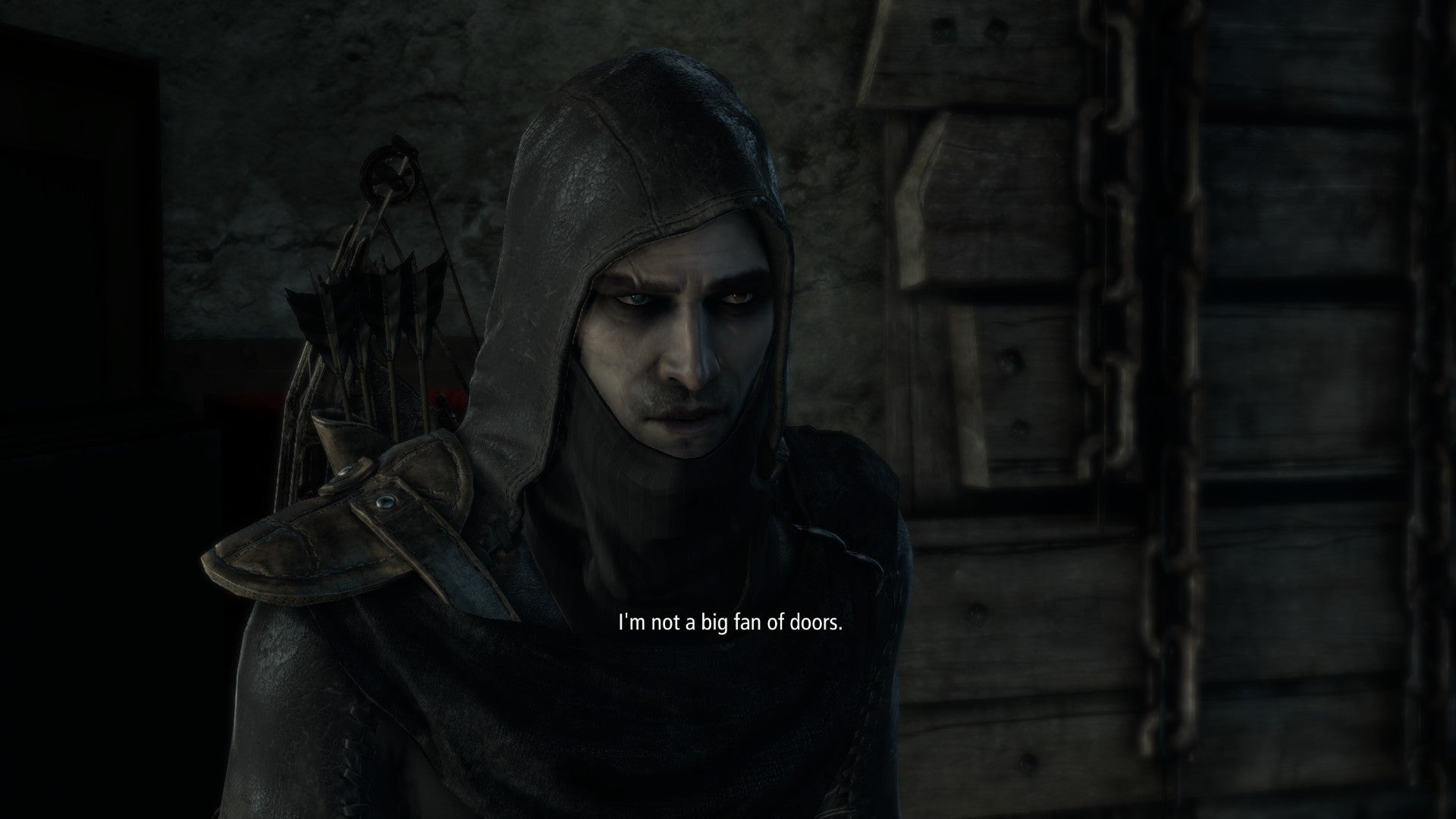
Early on in Thief, master burglar Garrett says to his accomplice, "It's not how much you steal—it's what you steal." He then spends the next twenty hours pilfering knives and spoons at four gold apiece.
Why do I bring that up? Because the hypocritical anecdote sums up this fun, but ultimately forgettable reboot of the classic stealth series held so deeply in the hearts of legions of gamers. Let's dig in. 

Is it really Thief?

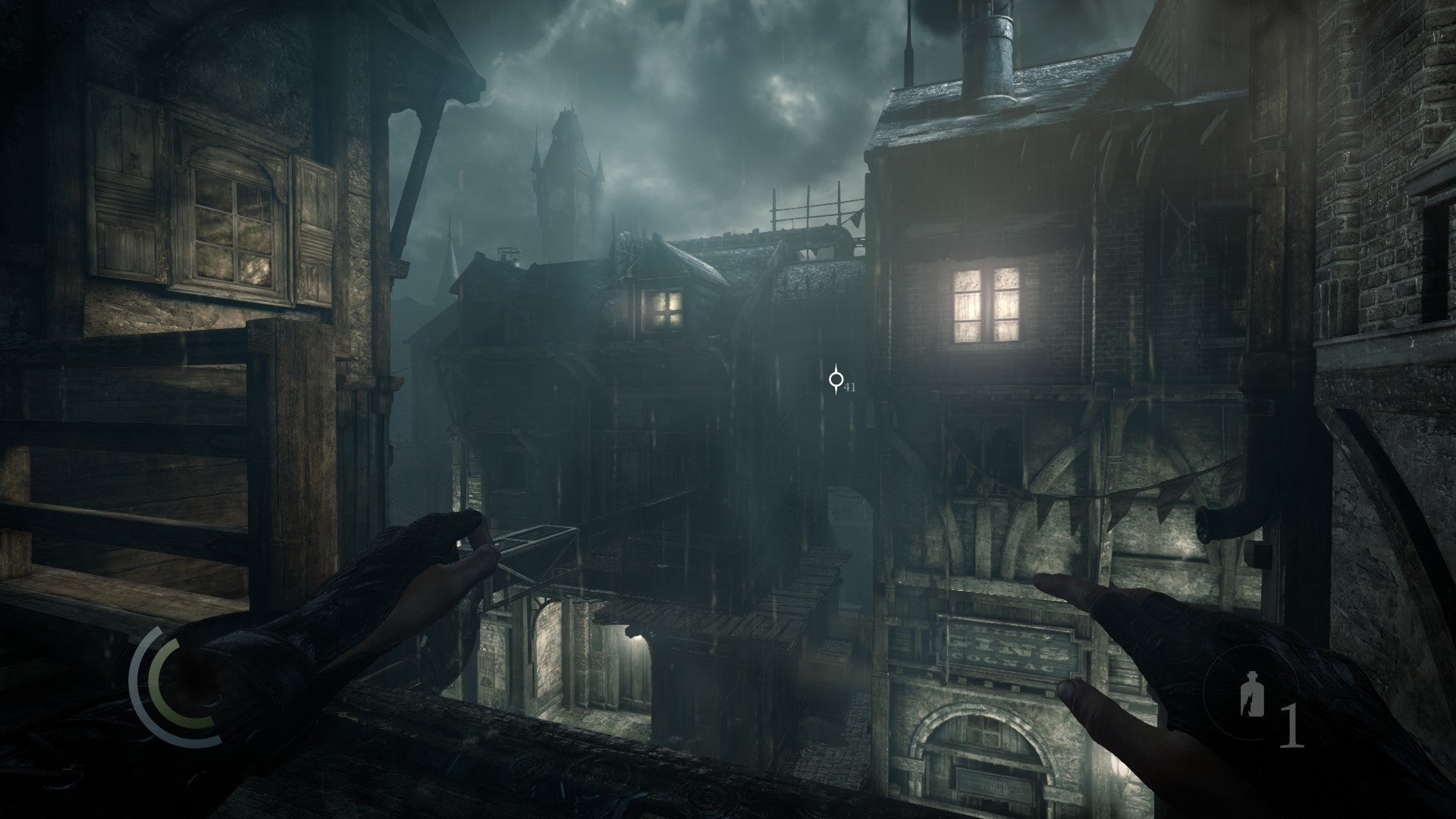
Thief is a reboot, but it once again puts us in control of the aforementioned Garrett, a master thief who for some inexplicable reason feels the need to steal every little trinket he sees instead of merely focusing on the prize at hand. As you might expect from a game about thievery, it's a stealth game played out from the first-person perspective. You'll take on all manner of jobs around The City—one part medieval-era slum, one part Industrial Revolution-era factory town.
This time you have amnesia, of all things (video game trope #1: check). After a job gone wrong, you awake to find you've forgotten the last year. What were you doing the whole time? Why is the entire city ravaged by a plague known as The Gloom? And who the hell did the people of this city call on to do their interminable, inane fetch quests while you were gone?
Thief
Good ol' Garrett. Even amnesia can't get him down.
Let's forget all the "Is Thief Thief-y enough for a Thief fan?" controversy for the moment—that whole argument is too subjective for me to really want to delve into. Suffice it to say, Eidos Montreal did not take a Dungeon Keeper-esque crap on a beloved franchise. This might not be exactly the Thief game you wanted, but it's also not a mockery of everything you held sacred.
Many of the hallmarks of the series are here: heists and capers, incidental petty theft, environmental puzzles and traps, a bow that shoots too many types of arrows, multiple paths to objectives, and a touch of the supernatural.
Unfortunately it takes about twelve hours too long for all of this to come into play.

Slow starter

I'm about to lay into Thief pretty hard, so I'd like to state for the record: I think Thief is a perfectly decent game. It's a serviceable reboot, and a fine time-waster to cap off the slow February release schedule.
That being said, I have a lot of problems with the game—some so minor they're more properly termed "quibbles," and some very serious.
Thief
So much city. So many forgettable quests.
For one, the first half of Thief is so forgettable that I've quite literally forgotten most of it already, a mere two days after playing it. We're talking about ten to twelve hours of lead-up and fetch questing—on relatively linear levels—before the plot really finds its way and you get a feel for the world. To say it "starts slow" is a gross understatement.
But once started, the story is actually fairly compelling in that summer blockbuster way we've all come to expect from AAA games. It's an amalgam of a bunch of game tropes—for instance, game trope #2: level taking place in a mental institute, and game trope #3: vital information conveyed through notes conveniently scattered around the level—but it's all pieced together with enough intrigue and tragedy that it held my attention through at least the back half of a solid 20+ hour experience.
Thief
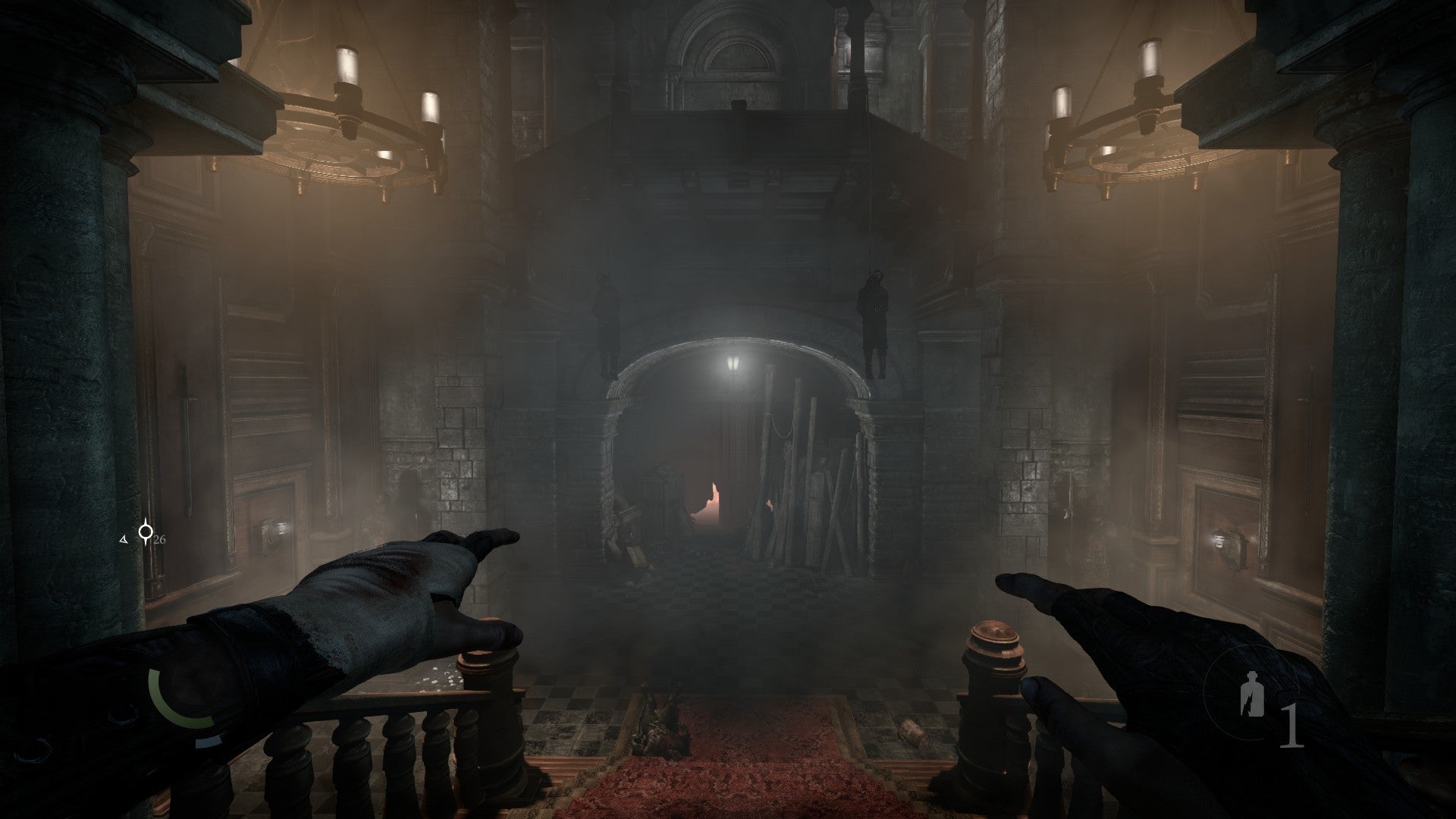
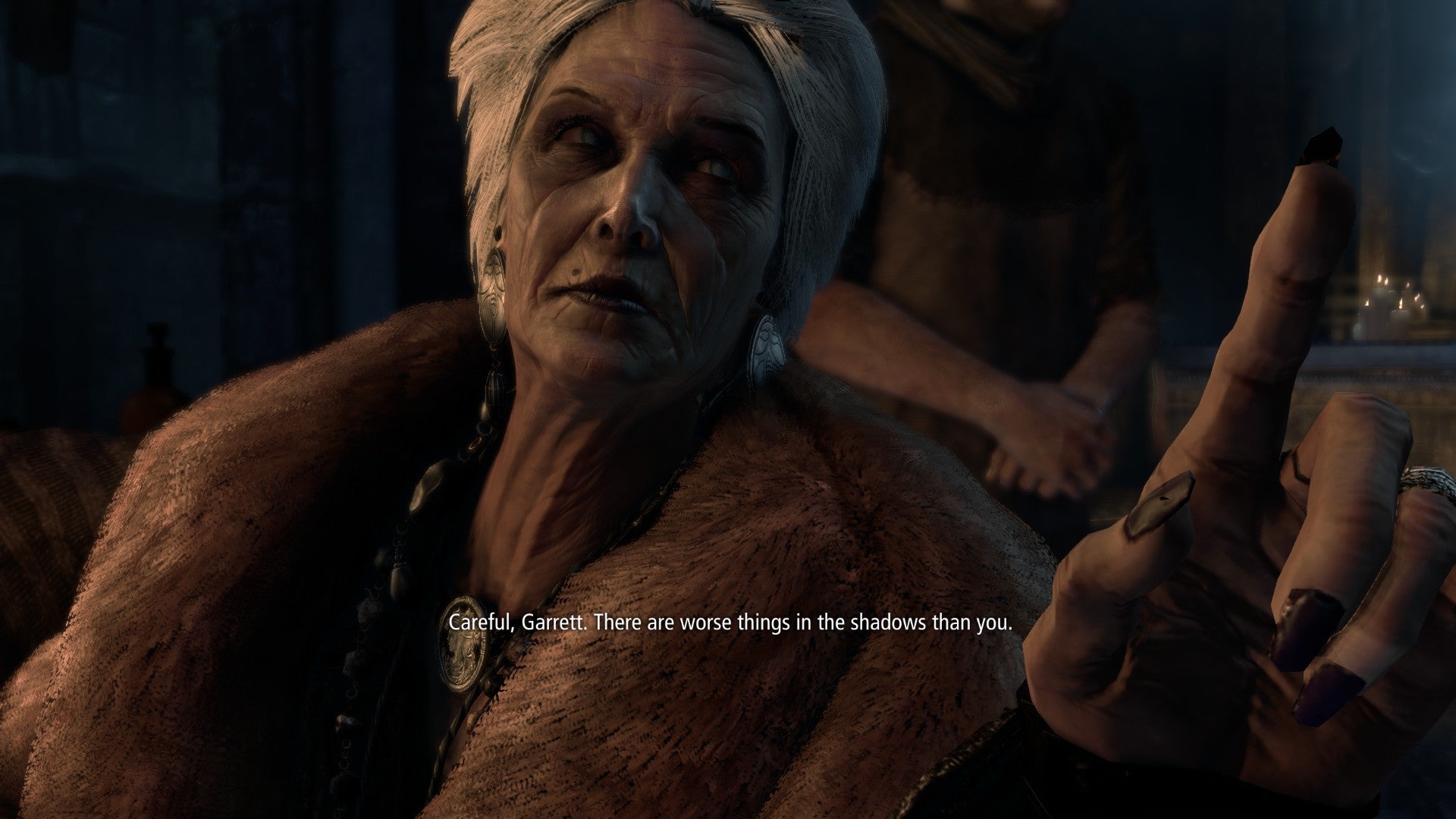
As you can see, the story goes to some dark places.
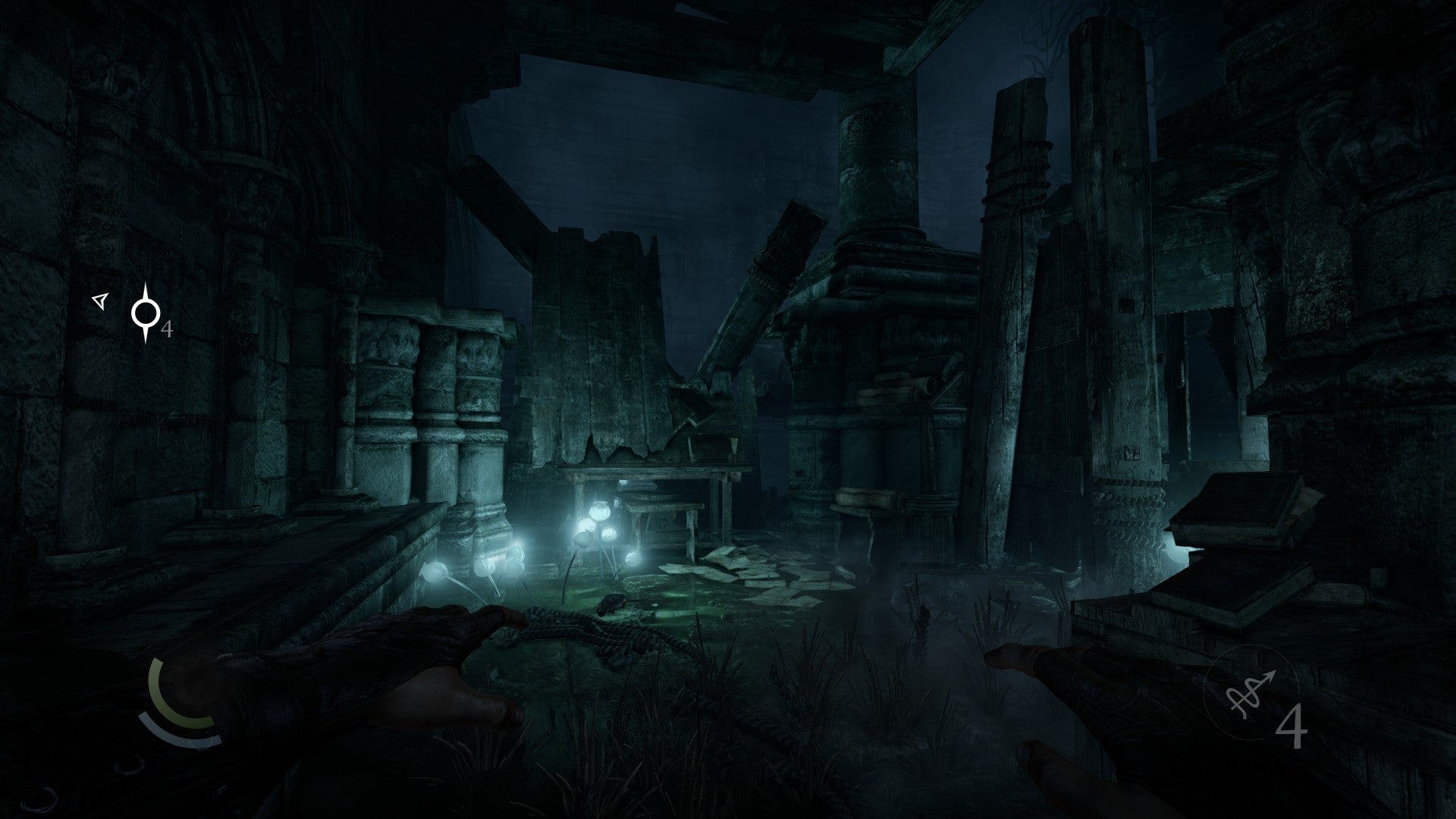
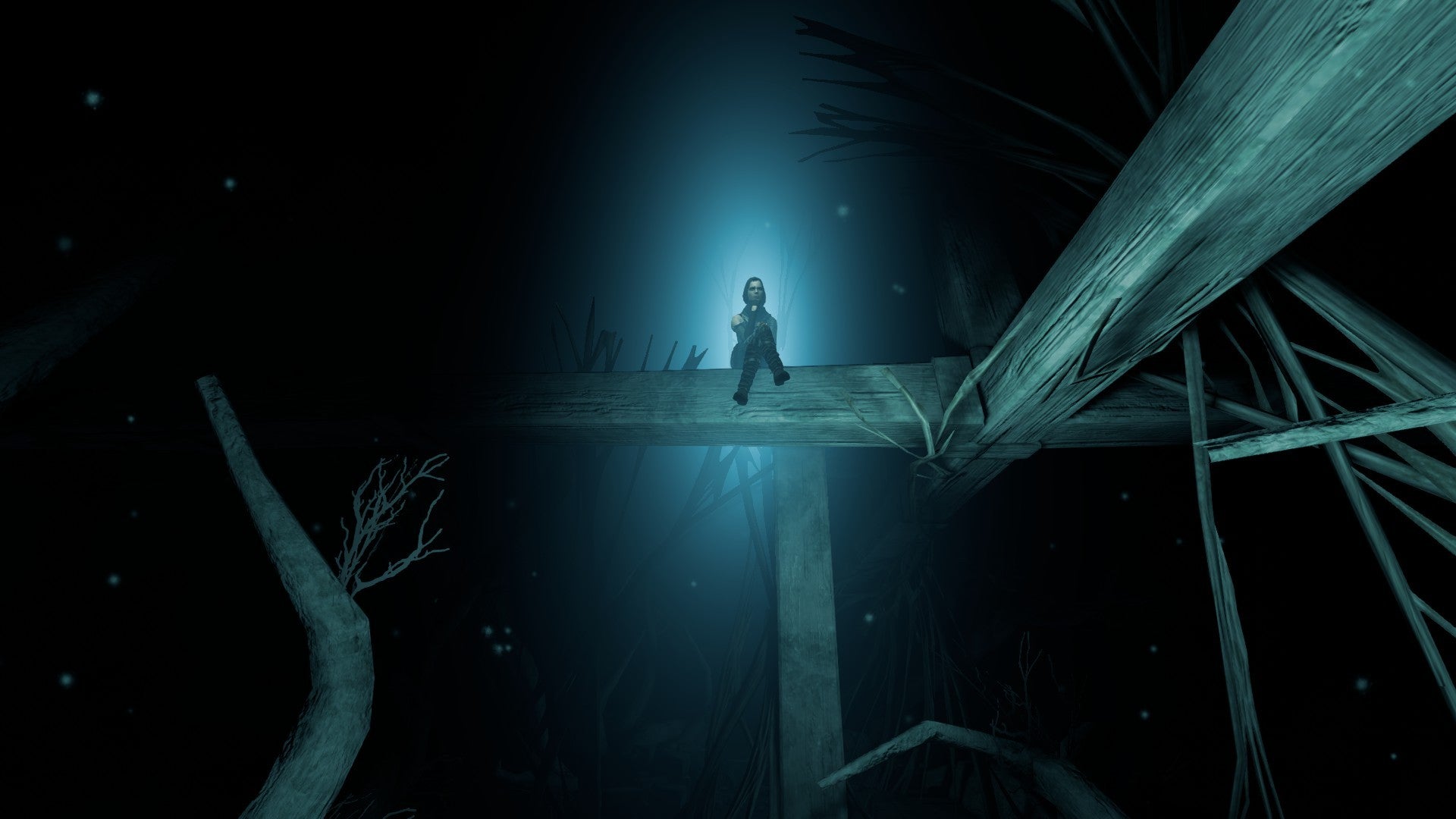
The game even manages to do supernatural without seeming hokey—no small feat. I'd go so far as to say that Thief has the best Amnesia: The Dark Descent-esque horror level since Amnesia itself.

A post-Dishonored world

But while Thief's lore has its die-hards, most people are just here for the larceny.
So let's talk Dishonored for a bit, because as far as I was concerned we'd already gotten a modernized Thief game. Remember when Fallout 3 came out and everyone dismissed it as "Oblivion with guns"? And then by the time Skyrim came out, people were joking that it was Fallout with swords?
Dishonored took some of the best parts of Thief—weird industrial-fantasy setting, multi-path stealth gameplay—and attached it to a superb combat system that was there if you wanted it, though you were of course free to run each level without killing people. (Plus it had that cool teleport spell.)
Thief
So much of Thief feels similar to so much of Dishonored.
Which brings us to ThiefThief plays a lot like a Dishonored prototype. Like Dishonored, except you're not quite as agile, and you suck at combat. In other words, like Dishonoredbefore Arkane really figured out what would set Dishonored apart. And, as a result, I spent most of my time with Thief wishing I could just replay Dishonored.
Thief feels torn between tradition and modernity. It wants so badly to feel like originalThief, but it also wants to feel approachable like Dishonored. As a result, it's something of an unholy abomination of the two. Thief even has a pseudo-teleport: An action the game labels "swooping," which allows you to run rapidly across a brightly lit area without being seen, as if the guards are too dumb to see the man clearly sprinting across the light in front of them.
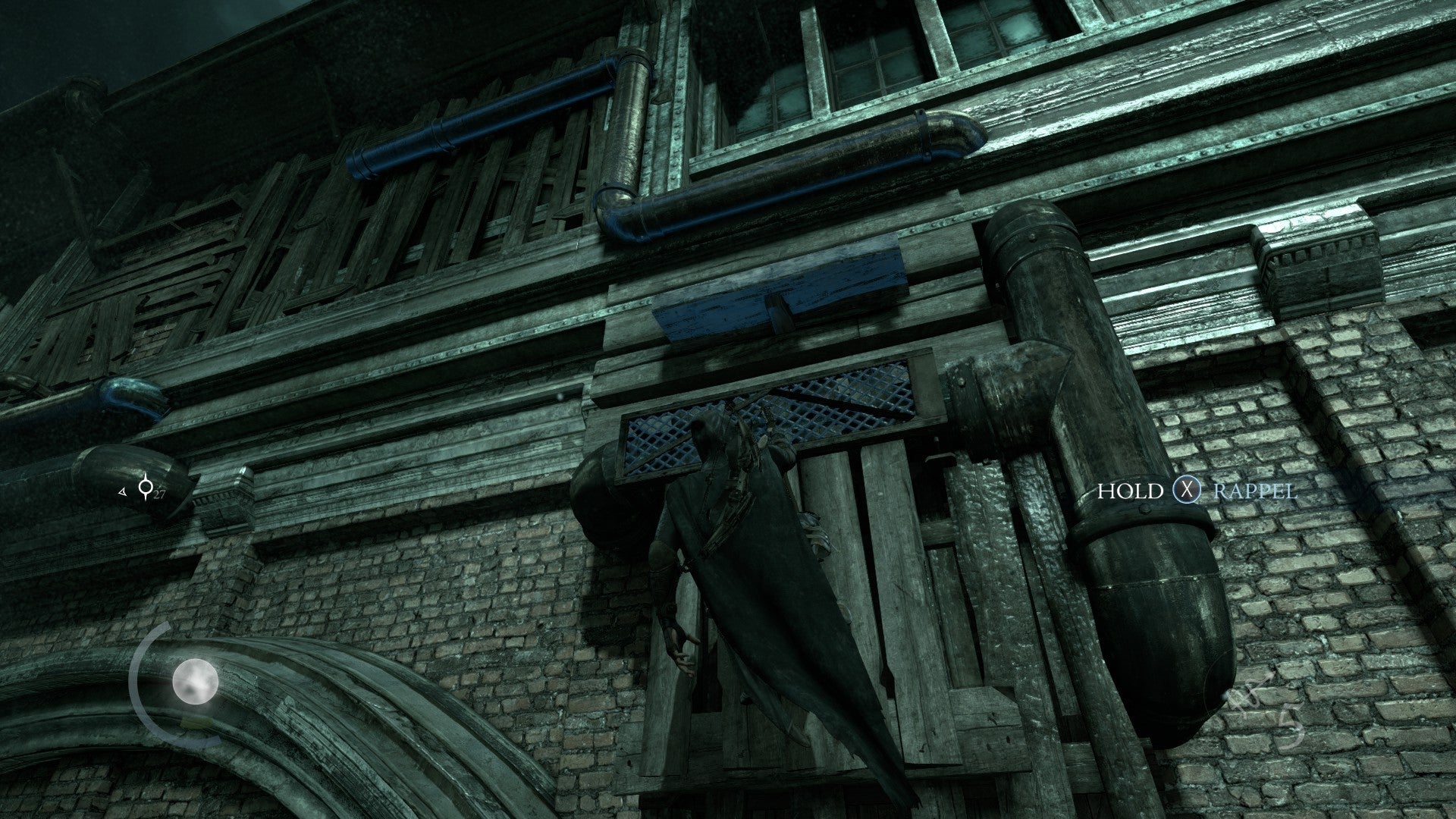
Garrett is just not very agile, however—even less so now that there's no dedicated button for jumping. Instead, one button makes you free run like you're in Assassin's Creed. This is not Assassin's Creed, though (except when the game pulls back into third person perspective for no reason and you climb a wall like Assassin's Creed).
Thief
Yes, this is a screenshot from Thief. No, I don't know why they added these weird third-person sections.
I remember going to a Thief preview event and the person running our demo told me, "I'd save every time I get on the roof if I were you. Otherwise there's a good chance you'll jump off by accident and die." Things have not gotten better. I committed at least a dozen accidental suicides by mistakenly jumping off the edge of the roof. There are also plenty of times I was stopped in my path by a box ankle-high.
The lack of a jump button, to me, is the fundamental area where Thief breaks down. It ties into everything. Level designs are simplified—you can only get to areas the developers clearly mark as climbable, so all paths to your goal are relatively obvious and there's less chance for items to be truly hidden. It's easy to get frustrated by puzzles because you clearly see the solution, but Garrett won't do what he's supposed to. Garrett just doesn't move like a master thief.
The other problem is the enemy AI. I'm not just talking about it being too easy on the game's equivalent to Normal difficulty (though it is really easy). The enemies are inconsistent. Sometimes you're taking out a guard's buddies in broad daylight and he doesn't even notice. Other times you're quietly sneaking up on him from behind and he whips around with an "A-ha, I just caught you eating the last piece of cake you bastard," look on his face without provocation.
Thief
She lies. The enemies are too dumb to be threatening.
And forget about that talk of enemies knowing the level layout and searching for you accordingly—at least on Normal, enemies are woefully dumb when it comes to your whereabouts.
No, I don't even want to bring up the infuriating boss fight 90% of the way through the game.

Might as well be Van Gogh

I also think the sound deserves a specific complaint section in this game. Stealth games live and die by their sound—it's essential to know where enemies are at all times, and since you're often hiding behind objects it falls to your ears to keep things straight.
Thief has major audio issues. Sometimes you'll enter areas and two characters will repeat the same conversation ad nauseam until your brain breaks. Sometimes two sets of two characters will have the same conversation overlapping each other, like they're singing a round.
Ambient noises don't fade as you walk away; they drop out. Noticeably. And then come back in full volume immediately when you step back into range.
Thief
At least it looks good.
Sometimes a guard speaking in the same room as you is whisper-quiet. Other times the guard three floors above you comes in loud and clear.
It's all a bit disconcerting, and makes your life as a thief even harder because your ears are basically useless. Hopefully this can be fixed in a patch, but at the moment it's a bit of a mess. No word whether the console versions have the same problem (I played the PC version).

Bottom line

I know I've hit Thief pretty hard in this review. But for all its flaws, I really did enjoy Thief for what it is, and "what it is" is a harmless and even sometimes fun game that I kind of wish was DishonoredThief is both a decent version of its ancestors and a decent version ofDishonored, but doesn't excel at anything on its own—and as a result, it won't amaze or stick with anyone. At the end of the year, when it comes time to create your own game of the year list, it will be one of those titles you think back on and go, "Oh yeah, Thief came out this year didn't it? Hm."
That's it. No hatred. No love. Just total ambivalence and faint recollection of a few fond hours spent stealing the nobility's dishware.

Rabu, 19 Februari 2014

Rust

Rust is a game about survival. But that takes time. Initially, it's just about death. It's about freezing to death, and starving to death, being shot to death and getting bitten to death; occasionally mixing things up a little by slipping on a warm radiation coat and fading faster than your faith in humanity after being stabbed in the back by a supposed friend's hatchet. Sometimes you get gored to death. Other times, bored to death. It's not easy, surviving post-apocalyptic civilisation with nothing but a rock - especially when your enemies have guns, and double-especially in a game that makes you work just to earn a pair of basic trousers.
Even this early into development, Rust's mix of DayZ and Minecraft (the easiest comparison, though Wurm Online is more apt) has won it no shortage of fans - some of them not even psychopaths, hackers and trolls on the hunt for new victims to murder and mock over voice chat. It's the kind of game that's less a shooter than an engine designed to tell stories. Those stories are mostly, as ever, in the field of bastardom, but there's scope for some humanity amongst all the pranks and murder. It's also a world that focuses on demanding effort rather than promising to reward it: starting players out naked and hungry and alone, dangling the potential of going on to build forts, craft weapons, and finally savour the air at the top of the food chain.
1
Crafting is the most important part of this, though there are loot crates - both in radioactive remnants of civilisation and regularly dropped from passing planes - that provide free toys to play with and blueprints for advanced gear that, unlike your inventory, survives death. Early on, the priority is making basic tools like a stone hatchet, a bow, a hut and a sleeping bag by beating supplies out of trees and rocks and animals... usually cloth, for some reason. Later, blueprints, furnaces and workbenches offer more advanced gear like metal doors that other players can't so easily get through, and armour capable of protecting against bullets and lingering radiation fields, as well as keeping you warm and covering up your naughty bits.
Building a solid place to call your own is by far the most important thing to focus on - ideally backed up by friends, because on default rules, your character becomes an unconscious, vulnerable sleeper rather than vanishing on log-out. Not all servers use this though, with some even going for pure co-op. It's not a very fun mode to play, though, odd as missing the gankers might seem. Too quiet. Too much time grinding without distraction.
As far as game completion goes, all the basic components here are in place and fully playable, including wildlife to hunt and be hunted by, a range of weapons to craft, and a decent-sized map that's more than capable of handling over a hundred players in its valleys, forests and ruins. Current stress tests are cranking that up to 300 for true Spartan madness.
The basic goal underpinning the action - "Survive!" - feels somewhat unambitious, as well as depressingly acting as license for a player-base of social Darwinists to be on their worst behaviour
2
That said, most of the details are very rough, with much work left in everything from making combat mechanically satisfying, to putting proper sound effects in, to generally finding the balance between Rust's various inspirations. The map, for instance, is far blander than DayZ's Chernarus, and mostly filled with generic forestry and plains and space left empty to give players scope to develop each server in their own image. This sounds cool, but at the moment, the primitive components don't offer anything like enough freedom to create interesting things. On a Minecraft server, absolutely anything could be waiting around the next corner in all its blocky glory. Here, it's almost always going to be a generic wood shack or tower, usually long abandoned or fiercely guarded by a proprietorial player who thinks himself a post-apocalyptic badass but acts far more like Cletus the Slack Jawed Yokel.
That side of things being so prominent also makes the basic goal underpinning the action - "Survive!" - feel somewhat unambitious, as well as depressingly acting as license for a player-base of social Darwinists to be on their worst behaviour. The same can be said of DayZ, of course, but in that game the setting and mood go hand in hand with the brutality - ruthless scavengers picking through a broken world gone long past the point of no return. Rust presents something with more possibilities, and in doing so often feels like it should be offering more to actually survive for. At least, something more than finally scraping together the explosives to go kick over other kids' sandcastles.
Simply getting to that point offers plenty of challenge, however, not least because the resource economy is currently completely broken - especially on busy servers. Survival requires food, but you can easily starve to death without even seeing an animal to extract life-saving chicken breasts from. (For the moment, it's always chicken, even if it's a pig, though other foods are available elsewhere.) It can also take several lives just to luck into enough stone to construct the most basic hatchet for gathering supplies, or a single piece of the cloth you need to construct a sleeping bag that acts as a respawn point, only to lose it all after being spotted by a player with a gun or getting too close to a wild animal or zombie. Speaking of which, yes, Rust has zombies. Of course it does. They're not around in huge numbers though, and thankfully not long for the world, hanging on for the moment as placeholders for something that can't help but be better simply by not being more bloody zombies.
Rust is firmly a base for what might be a great game later on rather than a great one right now. It's seen best in quiet moments, when players aren't around to troll and murder, and crafting and raw survival take the focus. There's more than enough here to suggest great things in Rust's future as it evolves its crafting, its combat, and clears out the zombies to further find its own niche in 2014's upcoming war of survival games. It has the tools to become something very special, and hopefully will provide players with enough to do the same.Provided you're in the mood for a player-versus-player game that makes you work to not simply be a victim, and ideally have a few friends to band together and scare off passing opportunists, Rust's challenge already offers enough of a survival experience to be worth a look. It's as primitive as its rock-smashing cavemen in many ways, and lacks both DayZ's atmosphere and the raw punch of its setting, but the focus on building and crafting does make for a notably different experience. It's worth waiting for a few more patches, though, so that the developers at Facepunch can fix the resource lottery that makes getting started such a chore - and even then, you should take time to find a server where operators are watching for hackers instead of letting them have their fun.

Selasa, 18 Februari 2014

Watch Dogs

Watch Dogs hands-on preview – the right connection
GameCentral gets its first chance to play Ubisoft’s highly anticipated new game, but is it a genuinely next gen title or just another GTA clone?
Having now played most of the launch games for the Xbox One and PlayStation 4 we have to face the inevitable question of which is ‘best’. Comparing Need For Speed: Rivals to Call Of Duty: Ghosts may seem silly but with more than 20 new games out for each console somehow a decision needs to be made. Either way we won’t be able to make a final determination for several months yet, but it’s obvious that Watch Dogs is an early frontrunner.
If you don’t count the late lamented Star Wars 1313, and ignore the fact that it’s also on current gen formats, Watch Dogs was the first next generation game ever to be revealed. Ubisoft wouldn’t admit it at the time but back at E3 2012 it was obvious that the demo they were showing looked far better than the Xbox 360 or PlayStation 3 could ever possibly manage.
Not in an overtly showy way perhaps, but the level of detail in its open world recreation of Chicago is at times staggering. From the wind gently blowing rubbish across the street to the hordes of ordinary people going about their business this feels more like a living, functioning city than any other game before it.
And yet at first glance it does seem to be nothing but a high res Grand Theft Auto clone. And indeed in basic gameplay terms that’s exactly what it is. There are a number of cleverly next gen features, they’re just not necessarily the ones you’d expect.
In the half hour demo we played we were technically allowed to go anywhere and do anything, but were gently encouraged to visit a nearby security centre in order to hack their systems. As you may know the game’s story revolves around Chicago using a new all-powerful computer system that controls every utility and electrical system in the city. But your character, and others, are able to hack the system and cause various kinds of mayhem as a result.
All this is controlled via an in-game smartphone, although what we didn’t realise until Gamescom is that you cannot hack anything at a distance until you take out the local hub. This is guarded by very angry-looking men with guns, who shoo us away for even approaching the place. The attending developer is sweetly ambiguous about whether we should just shoot our way in or try something more clever, so we formulate a compromise and perform a headshot on the nearest guard before ducking around the other side of the complex as everyone else rushes to where their dead comrade is.
As we jump over a fence and stealthily creep towards our goal the plan works better than we hope and we’re able to hack a security camera, which then controls another camera inside the building, which in turn has a bead directly on the central hub computer. (The developer happily informs us that we’re the best she’s seen at this bit all day, although we’re not so sure that’s not due to luck rather than skill.)
Watch Dogs - hacking the hacker
Once our hacking is done we sneak back the way we came, but find that the guards don’t have the goldfish memories of other computer bad guys and we’re shoot at as we escape. Luckily we’re able to commandeer a parked car along the way and can disappear into the downtown area where another point of interest lies.
Along the way we get a chance to marvel at the sheer size of the city. We’ve never been, so we’ve no idea how accurate it is, but the game gives a convincing impression of a real place, as the shabby outskirts we start in give way to a connecting motorway and then more salubrious buildings of ever-increasing size.
This also seems a good point to note that, since we’re playing the PlayStation 4 version, the newly redesigned triggers for the DualShock 4 controller work great when driving a car. In fact the vehicle handling and gunplay are both excellent, and miles ahead of anything Rockstar has been able to manage so far.
We’re not quite sure how much of what happens next the developer new about in advance, but she points out that a nearby electronics hub is ‘interesting’ and as we hack into it a nearby mobile elevator is activated. Getting into this creates a shortcut across the block but suddenly our screen goes funny and we’re told we’re being ‘hacked’.
As another cheeky-looking developer peers round from the TV on the other side of ours it’s revealed that he’s barged into our game and is attempting to take control of our system in order to boost his own online high score and speed up his general hacking ability. Doing so doesn’t really inconvenience you as a player, but it’s clearly intended as a less severe version of Dark Souls’ player invasions.
The only way to stop our intruder is to hack everyone’s phone nearby and find him through a process of elimination. Even when you set your phone on search, so that all nearby hackable devices are automatically highlighted, this is a difficult process in the short time limit you have (a progress bar at the top of the screen is quickly counting up to 100%).
But we find our man and pursue him down an alleyway and after a quick bit of parkour (pressing the triangle button leaps you over most objects) we perforate him for his impertinence. Again we seem to have pleased our unusually cheerful developer, who congratulates us and encourages us to get our own back by invading his world.
This we do and, having caught him trying to hide in plain sight amongst the crowds, start the hack and then run straight down a back alley and keep out of sight. Circling back round the other side of the building we can see our mark rushing around trying to search everyone but we keep out of his way just long enough to complete the hack and win the kudos of all (well, of the developer and the two people standing behind us).
Given the obvious comparisons to Dark Souls you could argue this isn’t necessarily all that new an idea, but given the fidelity of the city, the competency of the driving and shooting, and the novelty of the hacking we came away very impressed.
Watch Dogs - attack of the killer iPad
What’s equally impressive is a separate demo afterwards, in which we indulge Ubisoft’s new love for tablet connectivity. Although the hack attacks can happen at any time this other competitive mode has to be agreed upon by both players first, not least because one of them is using a tablet (and so can be anywhere in the world) and the other the console and standard controller.
The developer briefly explains the set-up, as the player on the console (us in this case) is tasked with getting through a number of checkpoints in the city within a strict time limit. The other player on the tablet has to stop us, by directing the police via an overhead chopper and setting off exploding steam pipes or changing the traffic lights.
With our magic smartphone we can do the same thing though and in fact it’s our first real excuse to use hacking skills in anger, as we try to trap police cars in sudden traffic jams or punt them through the air as a bollard suddenly rises up out of the road. Those steam pipes are a problem though and can wreck a car in a single go, although we do have the advantage that although the player on the tablet can see all our objectives he doesn’t know in which order we have to get them.
We run out of the time in the end but it’s an impressive little tech demo and seeing a fully interactive version of the in-game map on tablet is a neat trick, especially if you imagine it being halfway across the world instead of in the hands of the person standing next to us.
We wouldn’t suggest that Watch Dogs is necessarily going to change the world or that many of its features are especially original but for a new IP designed primarily for new consoles it has that most important of qualities: it’s fun. And after the obnoxious amount of advertising, that’s surely only going to get worse in the coming months, it’s nice to know that all the fuss is worth it.
Source : metro.co.uk

ARC Game Blog Copyright © 2014 | Powered by Blogger

.